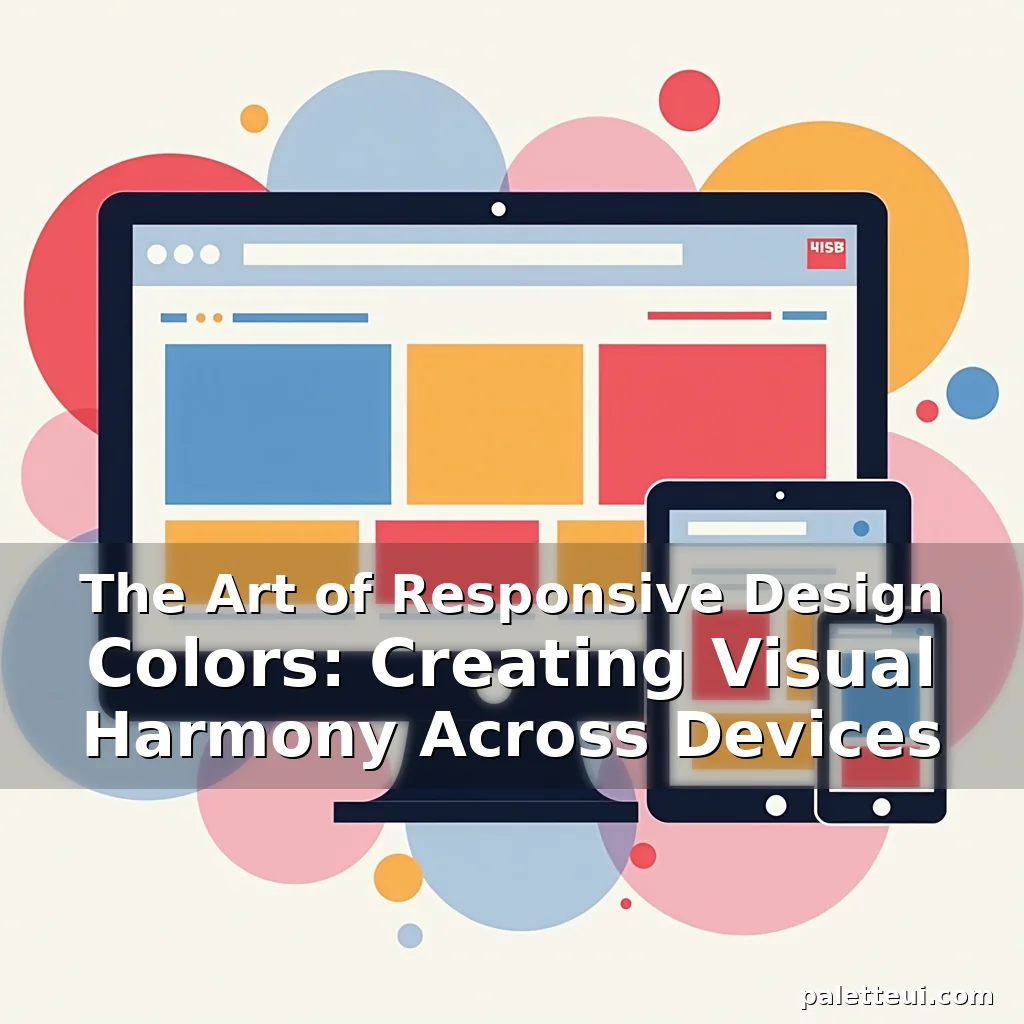
The Art of Responsive Design Colors: Creating Visual Harmony Across Devices
In today’s multi-device world, color plays a pivotal role in crafting user experiences that are both aesthetically pleasing and functionally effective across screens of every size.
A well-thought-out color strategy ensures your designs maintain visual consistency while adapting seamlessly to different display environments.
Understanding Color Theory in Responsive Contexts
Color theory forms the foundation for creating visually appealing designs, but its application becomes even more critical when designing for responsiveness.
When working with multiple screen sizes, designers must consider how color choices affect legibility and emotional impact at various resolutions.
- Hue variations: Adjusting saturation levels can help ensure text remains readable against backgrounds at smaller scales
- Contrast ratios: Maintaining minimum WCAG compliance is essential for accessibility across devices
- Analogous schemes: These often provide better adaptability than complementary schemes when scaling layouts
Device-Specific Considerations
Different devices have varying capabilities that influence how colors are displayed and perceived by users.
High-resolution Retina displays require precise color calibration to avoid pixelation issues during responsive transformations.
Screen Size Impacts
On mobile devices under 6 inches, subtle gradient transitions between primary colors enhance depth perception without overwhelming small screens.
Larger desktop monitors allow for bolder color contrasts and more complex palettes due to increased viewing distance.
Studies show that users perceive color accuracy differently based on screen size, with tablet users showing higher sensitivity to muted tones.
Crafting Adaptive Color Schemes
Create flexible color systems that respond dynamically to viewport changes through CSS media queries and variable fonts.
Using relative units like percentages rather than fixed hex codes allows colors to scale appropriately with layout adjustments.
- Media query breakpoints: Define distinct color expressions for mobile, tablet, and desktop views
- Variational gradients: Implement gradients that adjust intensity based on device resolution
- Dark/light modes: Develop dual-color schemes that switch automatically depending on ambient light conditions
Accessibility as a Core Principle
Ensuring color contrast meets accessibility standards is crucial for inclusive design practices.
Tools like Contrast Checker can help verify that text-to-background ratios meet WCAG guidelines across all device types.
- Text contrast: Maintain at least 4.5:1 ratio for normal text and 3:1 for larger headings
- Status indicators: Use red/green signals only when conveying critical information
- User preferences: Allow OS-level dark mode overrides through system preference detection
Performance Optimization Techniques
Optimizing color assets improves loading times and overall performance across diverse network conditions.
Prioritize using web-safe colors where possible to reduce browser rendering overhead.
- Image compression: Reduce file sizes of background images without sacrificing perceptual quality
- Caching strategies: Store frequently used color assets in local cache memory
- Lazy loading: Delay non-critical color elements until after initial page load
Beyond Aesthetics: Psychological Impact of Color Choices
Colors evoke emotions and influence user behavior, making them powerful tools for guiding interactions.
Warm hues tend to create feelings of energy and excitement, while cool shades promote calmness and professionalism.
- Brand identity: Consistent use of brand colors strengthens recognition across devices
- User flow: Strategic color placement can guide attention towards key call-to-action elements
- Mood setting: Subtle color shifts can transform interface moods from playful to serious
Trends Shaping Future Color Practices
Emerging technologies like AR/VR and voice interfaces present new challenges and opportunities for color implementation.
Adaptive color systems will need to account for three-dimensional spaces and audiovisual integration in future UIs.
- Immersive environments: Color needs to work harmoniously within spatial contexts beyond flat screens
- Spatial awareness: Depth cues may require color manipulation that differs from traditional 2D approaches
- Multi-sensory integration: As interfaces become more multimodal, color coordination must align with other sensory feedback
Case Studies in Effective Implementation
Leading companies like Google and Apple demonstrate best practices through their adaptive color implementations.
Google Material Design employs dynamic color themes that shift subtly according to context and user interaction patterns.
Apple’s Human Interface Guidelines emphasize maintaining consistent color relationships across all product ecosystems.
- Context-aware adaptation: Both platforms adjust color vibrancy based on environmental lighting conditions
- Ecosystem continuity: Their design languages remain recognizable yet adaptable across iOS, Android, macOS, and Web versions
- User customization: They offer extensive options for personalization without compromising core branding principles
Common Pitfalls to Avoid
Failing to test color visibility across different form factors can lead to poor usability experiences.
Overusing bright neon colors might look vibrant on phones but become glaringly distracting on larger screens.
- Ignoring baseline testing: Always validate color choices on actual devices rather than relying solely on simulations
- Underestimating context: What works beautifully on an iPhone might appear washed out on a low-quality smart TV
- Neglecting updates: Regularly review and update color strategies as display technology continues evolving
Conclusion
This exploration has demonstrated that successful responsive color design requires balancing aesthetics, functionality, and technical considerations.
By implementing thoughtful color strategies, you can create cohesive, accessible, and impactful digital experiences that resonate across all device platforms.